Open Mind Grocery Shopping Tips For You !


Open Mind, Grocery Shopping Tips
Open Mind, Grocery Shopping Tips wants you to focus on variety.
Choose a wide selection of low-fat foods rich in fiber. Include whole grain breads and cereals,vegetables, fruits, low-fat dairy products, and poultry, fish,and lean meat.
Although the goal is to reduce fat to 30 percent
or less of calories, when choosing foods that do contain fat,
try to choose ones that contain primarily unsaturated fats. For
example, choose an unsaturated-rich margarine instead of
butter; choose vegetable oils.
Read food labels. To help you find foods that are low in
fat and cholesterol and high in fiber, get into the
label-reading habit. Many nutritional labels on packaged foods
show the amount of unsaturated and saturated fatty acids and
the amount of cholesterol and fiber they contain. Check the
type of fat on the ingredients list. Is it an animal fat,
coconut or palm kernel oil high in saturated fat? Or, is it
corn or soybean oil high in polyunsaturated fat? Choose a
product with the lowest proportion of saturated fat.
Open Mind, Grocery Shopping Tips says read the label it
also tells you something else about a product. Ingredients are
listed in order of amount from most to least by weight. So,
when you buy a breakfast cereal, for example, choose one that
has a whole grain listed first (such as whole wheat or
oatmeal).
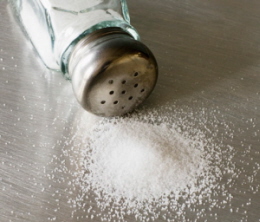 Pay attention to sodium. Many processed, canned, and
frozen foods are high in sodium. Cured or processed meats,
cheeses, and condiments (soy sauce, mustard, tartar sauce) are
also high in sodium. Check for salt, onion or garlic salt, and
any ingredient with "sodium" on the label. If the sodium
content is given on the nutritional label, compare products and
choose the ones with lower levels. One teaspoon of salt contains about 2 grams of sodium.
Pay attention to sodium. Many processed, canned, and
frozen foods are high in sodium. Cured or processed meats,
cheeses, and condiments (soy sauce, mustard, tartar sauce) are
also high in sodium. Check for salt, onion or garlic salt, and
any ingredient with "sodium" on the label. If the sodium
content is given on the nutritional label, compare products and
choose the ones with lower levels. One teaspoon of salt contains about 2 grams of sodium.
Do you Know? How to absorb salt in in stews and other dishes. If you've been too heavy handed with the salt when cooking, simply drop a few apple wedges into the pan. After cooking for another 10 minutes or so, remove the wedges which will have absorbed the excess salt.
We know that there is an association between too much
sodium in the diet and high blood pressure in some
individuals. Sodium is a mineral that occurs naturally in
some foods and is added to many foods and beverages as
salt or other additives.it is probably best for most people
to reduce the amount of sodium they eat. According to the
National Academy of Sciences, a safe and adequate amount
of sodium in the diet of the average adult is between 1
and 3.3 grams daily.

Return to Open Mind Food
Return to Open-Mind-Publishing Home Page